
Cookout Food Safety for Dogs: What's Safe and What's Dangerous
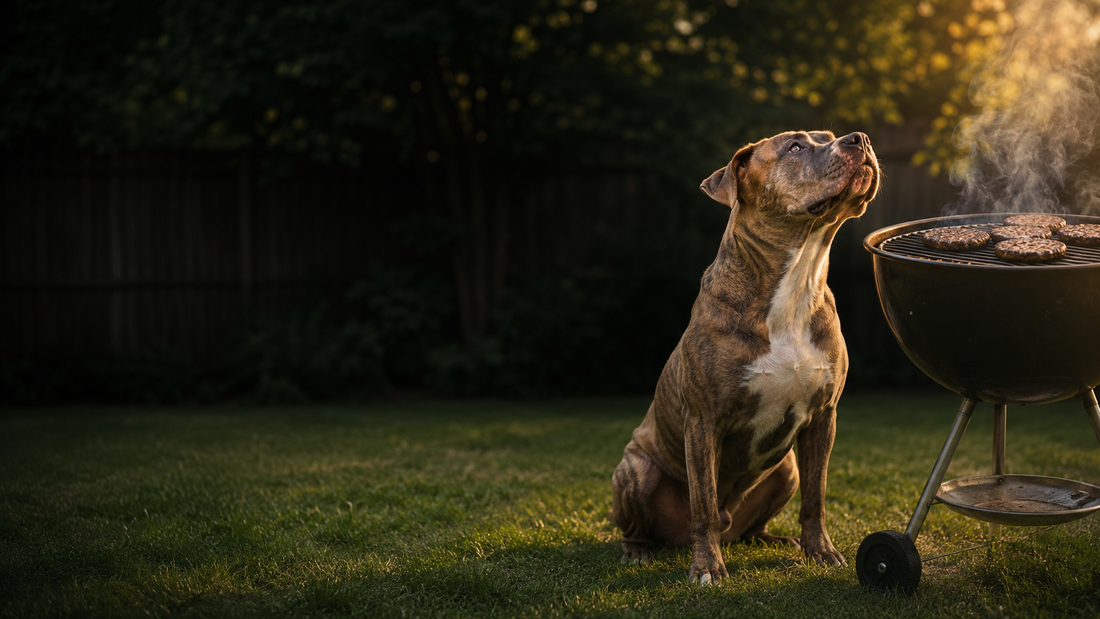
Cookout season is in full swing, and if your house is anything like mine, there's a dog parked under the grill running a full-time begging operation. At our place that's Bruno, our pit bull rescue, a big sweet lug who loses every shred of dignity the second a burger hits the grate.
So here is an easy to follow, plan of attack.
Plain, cooked, and unseasoned in small amounts is usually fine for a dog.
Seasoned, fatty, sugary, or on the toxic list means keep it away, no exceptions. The hard part is that the danger usually isn't the food itself. It's what's on it. Nobody hands their dog an onion, but plenty of people hand over a bite of burger wearing garlic powder, onion powder, and BBQ sauce.
The short version
- The seasoning is the sneaky danger. A plain burger patty is fine. The garlic and onion in the rub, the sauce, and the toppings are not.
- Completely off the table: onions, garlic, grapes, raisins, cooked bones, corn cobs, chocolate, alcohol, and anything sugar-free.
- Safe in small, plain amounts: cooked meat with no seasoning, watermelon without rind or seeds, carrots, green beans, cucumber, and corn cut off the cob.
- People food should stay under about 10% of what your dog eats in a day.
- If your dog gets into something dangerous, call your vet or ASPCA Animal Poison Control at (888) 426-4435. Save that number in your phone now.
The cookout list: safe and unsafe foods for dogs

What cookout foods are dangerous for dogs?
The most dangerous cookout foods for dogs are onions, garlic, grapes, raisins, cooked bones, corn on the cob, chocolate, alcohol, and anything containing xylitol. Fatty scraps and heavily seasoned meat are close behind. Some cause poisoning, some cause blockages, and none of them are worth the gamble.

Onions and garlic
These damage a dog's red blood cells in any form: raw, cooked, or powdered. Powders are actually the most concentrated, and per the Merck Veterinary Manual, garlic is several times more potent than onion. The sneaky part is where they hide. Burger seasoning, BBQ sauce, marinades, and butter blends are loaded with both. This is why that bite of seasoned burger matters more than people think, and it's also why symptoms can show up days later, not minutes.
Grapes and raisins
Even a small amount can cause kidney failure, and researchers still can't pin down a safe dose, so the answer is none. At a cookout they hide in fruit salad, trail mix, and the hands of small children who share generously. Treat any amount as a call-your-vet situation.
Corn on the cob
The corn is fine. The cob is not. Dogs gnaw the kernels, then swallow chunks of cob, and cob doesn't break down in the gut. It's one of the classic causes of intestinal blockage, and that usually ends in surgery. Cut kernels off the cob and share those instead.
Cooked bones
Ribs, wings, drumsticks, all of it. Cooked bones splinter, and splinters can pierce or block the digestive tract. Never, and that includes the trash. A dog that raids the garbage after rib night finds every bone you threw away, so get the trash out or lid it tight.
Fatty scraps and drippings
Burger grease, sausage, trimmings, chicken skin, and the drip pan can trigger pancreatitis, which is every bit as painful and dangerous as it sounds. Ask any vet what the week after a big food holiday looks like. Rich and fatty is the problem, so keep shared meat lean and plain.
Chocolate, desserts, and anything sugar-free
Chocolate is toxic to dogs, and the darker it is, the worse it is. The bigger sleeper is xylitol, a sugar substitute that also shows up on labels as birch sugar. It's in sugar-free gum and candy, some peanut butters, and even some ketchups and baked goods, and it can crash a dog's blood sugar fast. Check labels on anything sugar-free before it gets anywhere near the picnic table.
Alcohol
Obvious, but it happens every summer. Dogs will absolutely help themselves to an unattended beer or a sweet fruity drink sitting at ground level. Keep cups up and eyes open.
What cookout foods can dogs eat?
Dogs can safely eat plain cooked meat and a handful of fruits and vegetables in small amounts. Think a plain burger patty, boneless skinless grilled chicken, watermelon with the seeds and rind removed, corn cut off the cob, carrots, green beans, cucumber, blueberries, and apple slices without the core. The rule is plain, small, and occasional.
Watermelon deserves special mention. Per the AKC, it's about 92% water, which makes it just about the perfect hot day treat. Bruno would testify to this under oath.

Can dogs eat hot dogs?
A bite or two of plain hot dog won't hurt most dogs, but hot dogs aren't a good treat. They're loaded with salt, fat, and preservatives, and a whole one is far too much for a small dog. If you share, keep it plain and cut it small, since round slices are a known choking shape.
My honest take: skip them. Your dog will be exactly as thrilled with a piece of plain burger, and you keep the sodium out of it.
Can dogs eat hamburgers?
A plain, fully cooked burger patty with no seasoning is one of the safest things you can share at a cookout. The burger everyone actually eats is a different story. The seasoning in the meat, the sauce on top, the melted cheese, the grilled onions, that's where the trouble lives.
The easiest fix I know: pull one plain patty off to the side before you season the batch. Takes ten seconds, and it turns the whole question into a non-issue. That's the dog's burger.
How much people food is too much?
Treats and table scraps of every kind should stay under about 10% of what your dog eats in a day, a guideline backed by the AKC and veterinary nutritionists. The other 90% is their actual food. So whatever your dog scores off the grill counts against that 10%. Keep it small, keep it plain, and the cookout stays a treat instead of a stomachache.
What should you do if your dog eats something dangerous?
Don't wait to see what happens. Call your vet, or call ASPCA Animal Poison Control at (888) 426-4435. It's staffed around the clock, and it's the first call to make if your dog got into something they shouldn't have.
Signs worth acting on: vomiting, diarrhea, drooling, weakness, pale gums, a painful or bloated belly, or wobbly movement. With onions, garlic, grapes, and raisins, symptoms can take days to show up, which is exactly why you call first and watch second. Know what they ate, roughly how much, and when. That information speeds everything up.
The easiest trick: give your dog a job
Every rule above gets easier to enforce when your dog has something better to do than work the crowd. A dense, serious chew parks the begging operation on a blanket in the shade and gives all that hopeful energy somewhere to go.
That's exactly what we carry at Devil Dog Pet Co: yak chews, bully sticks, and elk antlers, matched to your dog's size and chew style. Set them up away from the grill and the dropped-food zone, supervise like always, and take the chew away once it's small enough to swallow.

Shop natural chews at Devil Dog Pet Co
Cookout food safety FAQ
Can dogs eat BBQ sauce?
No. BBQ sauce is mostly sugar and salt, and most recipes include garlic and onion powder. A stray lick is unlikely to cause harm, but don't share sauced meat, and wipe saucy fingers before handing over anything plain.
Can dogs eat corn on the cob?
They can eat corn, never the cob. Cut kernels off and share those plain. Swallowed cob chunks don't digest, and they're a classic cause of surgical blockage.
My dog ate one hot dog. Should I worry?
One plain hot dog is unlikely to hurt a healthy medium or large dog, though it's a lot of salt and fat in one sitting. For small dogs, or if the hot dog was loaded with onions or sauce, call your vet. Watch for vomiting or unusual tiredness either way.
Can dogs eat watermelon?
Yes. Remove the seeds and rind first, then share away. Watermelon is about 92% water, so it doubles as hydration on a hot day. Keep portions reasonable, since even good fruit counts toward the 10% treat limit.
My dog grabbed a burger with onions on it. What should I do?
It depends on your dog's size and how much onion they got. Don't wait for symptoms, because onion damage can take days to show. Call your vet or ASPCA Animal Poison Control at (888) 426-4435 and tell them the amount and timing.
Have a great cookout with your people and your dogs. Keep the good stuff coming, keep the bad stuff off the ground, and save the chart above somewhere you'll see it before the next grill day.
About the author: John Balcazar is the President and Co-Founder of Devil Dog Pet Co, a veteran-owned, family-operated company in Sterling Heights, Michigan that carries premium natural chews: yak chews, bully sticks, and elk antlers. Battle Tested, Dog Approved.
This article is for educational purposes and isn't a substitute for veterinary advice. If your dog eats something dangerous or shows concerning symptoms, contact your veterinarian or ASPCA Animal Poison Control at (888) 426-4435. Sources: ASPCA Animal Poison Control, American Kennel Club, Merck Veterinary Manual.